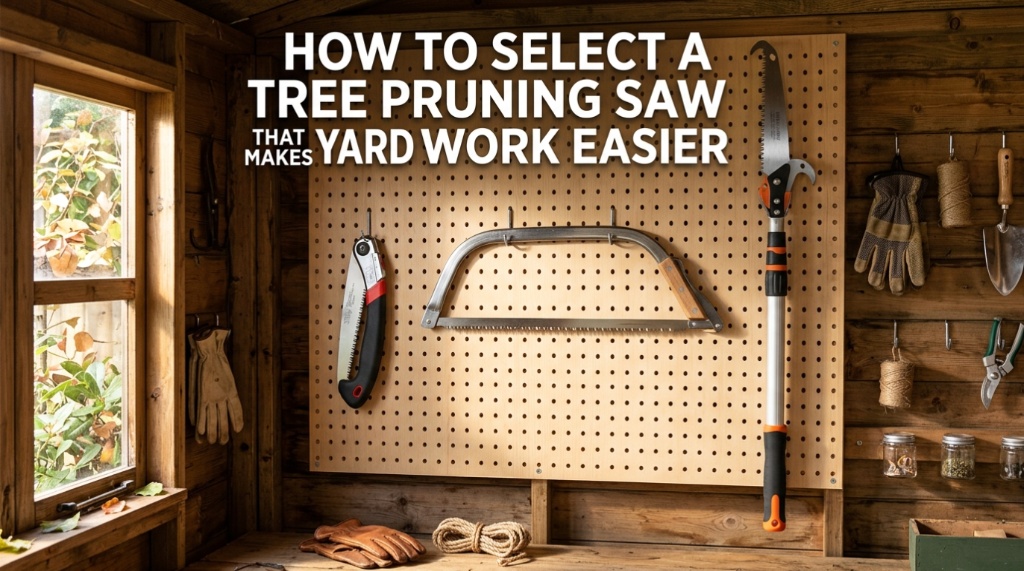
A neglected branch rarely announces itself before becoming a problem. One windy afternoon, a limb rubs against your roof, blocks sunlight from healthy growth, or snaps unexpectedly. The easiest solution is often choosing the right pruning saw before the job becomes difficult. If you’re wondering how to select a tree pruning saw that makes yard work easier, focus on blade design, cutting capacity, tooth pattern, and comfort. The right tool reduces effort, creates cleaner cuts, and helps trees recover faster after pruning. Following proven tree pruning tips and using the proper saw can save time, protect plant health, and make routine yard maintenance far less demanding.
What Is a Tree Pruning Saw and Why Does Choosing the Right One Matter?
A tree pruning saw is a specialized hand or pole saw designed to cut branches cleanly without damaging surrounding bark or wood.
Unlike standard carpentry saws, pruning saws feature aggressive teeth engineered to cut green wood efficiently. Choosing the correct saw matters because improper tools can tear bark, crush branch collars, and increase the risk of disease entering the tree.
Professional arborists consistently emphasize making clean cuts because healthy pruning supports stronger branch development and faster wound closure. Homeowners who select the right pruning saw often complete tasks faster with less physical strain and better long-term results.
For larger properties where branch removal becomes more demanding, understanding how pruning tools compare with equipment discussed in this property maintenance chainsaw guide can help determine when a pruning saw is sufficient and when heavier equipment is needed.
How Do Different Types of Tree Pruning Saws Compare?
The best pruning saw depends on branch size, tree height, and frequency of use.
Several pruning saw categories serve different purposes. Understanding their strengths helps you avoid overspending while ensuring efficient cutting performance.
| Type of Pruning Saw | Best For | Advantages | Limitations |
|---|---|---|---|
| Folding Saw | General yard work | Portable, safe storage, lightweight | Limited reach |
| Fixed-Blade Saw | Frequent pruning | Durable and efficient | Requires sheath |
| Curved Blade Saw | Fast branch removal | Improved cutting efficiency | Less precise on fine work |
| Straight Blade Saw | Precision pruning | Accurate cuts | Slightly slower |
| Pole Pruning Saw | High branches | Extended reach without ladder | Heavier to control |
Most homeowners find that a folding saw and a pole saw together cover nearly every pruning situation in a residential landscape.
Should You Choose a Folding or Fixed-Blade Pruning Saw?
Folding saws are ideal for convenience, while fixed-blade models are better for frequent heavy-duty pruning.
Folding saws fit easily into tool bags and reduce accidental injuries during transport. Fixed-blade saws often provide greater rigidity and durability, making them preferred by landscapers and arborists who prune regularly.
What Blade Length Is Best for Tree Pruning?
The ideal blade length depends on branch diameter and accessibility.
A common mistake is purchasing the longest blade available. Longer blades are not always more efficient. They require wider strokes and can be harder to maneuver in dense canopies.
- 6–8 inch blades: Light pruning and small branches
- 8–12 inch blades: General homeowner use
- 12–16 inch blades: Medium to large limbs
- 16+ inch blades: Heavy-duty pruning and professional applications
As a practical rule, choose a blade approximately twice the diameter of the branches you commonly cut. This provides efficient stroke length without sacrificing control.
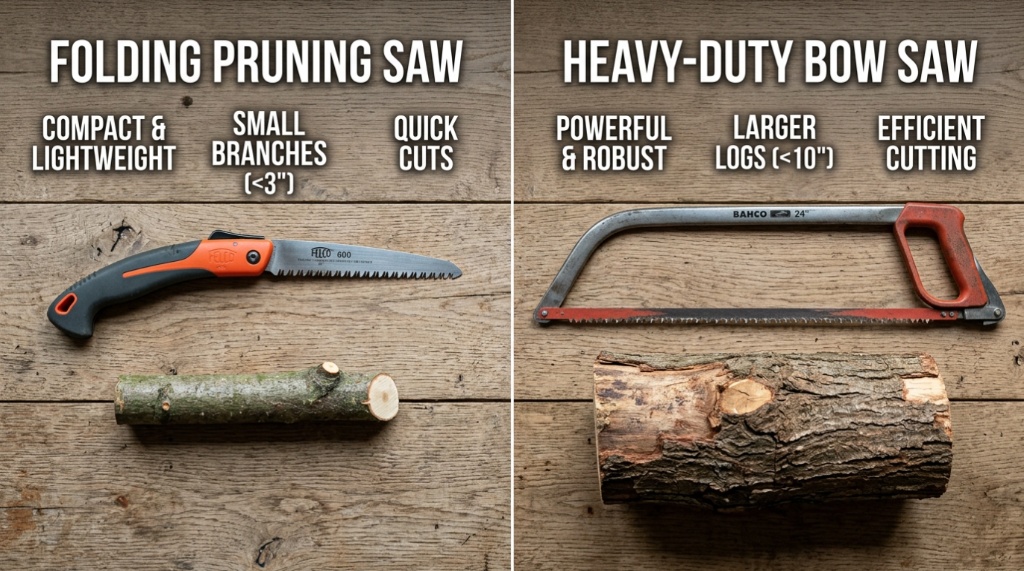
What Tooth Pattern Makes Cutting Easier?
Sharp, aggressive teeth designed for green wood dramatically reduce cutting effort.
Modern pruning saws typically use impulse-hardened teeth that remain sharp significantly longer than traditional teeth. Tooth configuration directly affects cutting speed and smoothness.
What Is TPI and Why Is It Important?
TPI means teeth per inch, and it influences both speed and cut quality.
- Low TPI (4–6): Faster cutting, rougher finish
- Medium TPI (6–8): Balanced performance
- High TPI (8–12): Smoother cuts, slower speed
For most tree pruning tasks, a medium tooth count offers the best combination of efficiency and clean branch removal.
Are Triple-Ground Teeth Worth It?
Yes, triple-ground teeth typically cut faster and require less effort.
These specially shaped teeth create three cutting edges rather than one. The result is smoother strokes, reduced friction, and quicker branch removal. Many premium pruning saw manufacturers use this design because it improves productivity without increasing user fatigue.
How Important Is Ergonomic Handle Design?
A comfortable handle can significantly reduce fatigue during extended pruning sessions.
Many buyers focus entirely on blade specifications while overlooking handle quality. However, discomfort often becomes noticeable long before blade performance declines.
Look for handles that provide:
- Non-slip grip surfaces
- Weather-resistant materials
- Finger protection guards
- Balanced weight distribution
- Comfortable grip contours
Rubberized handles are particularly beneficial when working in wet conditions because they improve control and reduce hand strain.
What Handle Material Is Best?
Rubber-coated composite handles generally offer the best balance of comfort, durability, and grip security.
Wooden handles remain attractive and traditional, but modern composite materials often outperform them in wet environments and require less maintenance.
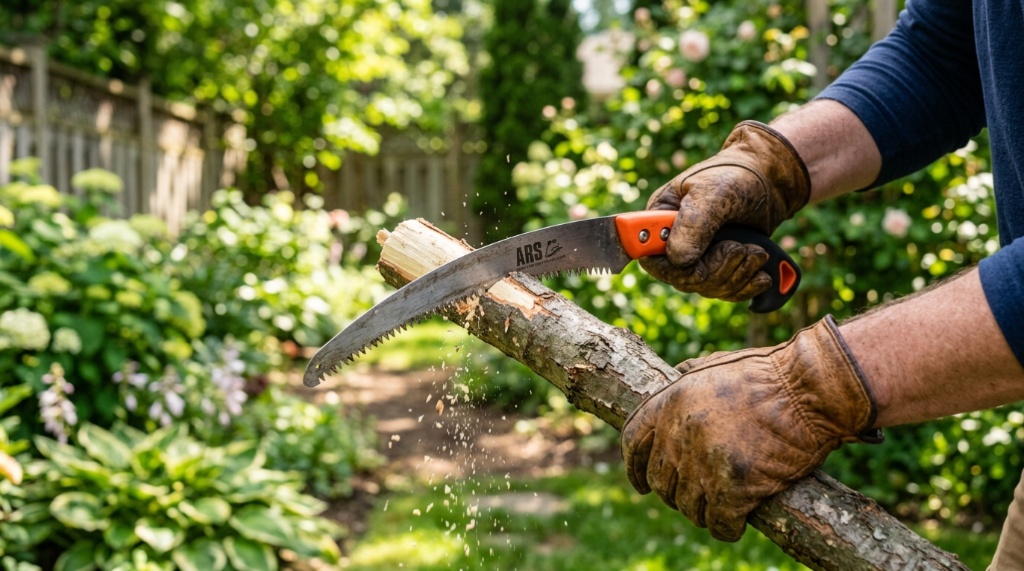
Should You Choose a Curved or Straight Blade?
Curved blades excel at fast branch cutting, while straight blades provide better precision.
The shape influences how the blade interacts with wood fibers throughout the cutting stroke.
- Curved blades maintain tooth contact during pull strokes
- Straight blades allow greater control in tight spaces
- Curved blades often remove material faster
- Straight blades are easier for detailed shaping work
For general tree maintenance, many homeowners prefer curved blades because they increase cutting efficiency with less effort.
When Is a Pole Pruning Saw the Better Choice?
A pole pruning saw is the safest option for branches beyond comfortable reaching height.
Falls from ladders remain one of the most common yard-work injuries. A quality pole saw allows users to prune overhead branches while maintaining stable footing on the ground.
Typical uses include:
- Removing dead limbs
- Clearing roofline branches
- Improving canopy structure
- Increasing sunlight penetration
- Managing fruit tree growth
Many modern pole saws feature telescoping shafts that extend several meters while remaining lightweight enough for homeowner use.
How Long Should a Pole Saw Be?
Most homeowners benefit from adjustable pole saws extending between 8 and 16 feet.
This range covers the majority of residential pruning tasks without excessive weight or reduced maneuverability.
What Features Indicate a High-Quality Tree Pruning Saw?
The best pruning saws combine durable materials, sharp teeth, comfortable handling, and reliable construction.
Before purchasing, evaluate these key features:
- Impulse-hardened teeth
- Rust-resistant steel blade
- Replaceable blade options
- Comfortable ergonomic grip
- Secure locking mechanism
- Lightweight construction
- Protective sheath or folding design
Quality blades often stay sharp for years under normal homeowner use. While premium models may cost more initially, they frequently provide better value over time due to durability and performance.
What Common Mistakes Should You Avoid When Buying a Pruning Saw?
Avoiding common purchasing mistakes helps ensure better performance and longer tool life.
Many homeowners purchase tools based solely on price and later struggle with inefficient cutting or discomfort.
- Choosing the cheapest option available
- Ignoring blade length requirements
- Selecting unsuitable tooth patterns
- Overlooking handle comfort
- Buying a saw too heavy for regular use
- Using a hand saw when a pole saw is safer
- Neglecting replacement blade availability
Investing slightly more in quality often results in significantly easier cutting and greater long-term satisfaction.
What Tree Pruning Tips Help You Get Better Results?
Proper pruning technique is just as important as selecting the right saw.
Even the highest-quality pruning saw cannot compensate for poor cutting practices. Following established arboriculture principles helps maintain tree health while improving safety.
- Prune during the recommended season for each species
- Remove dead or damaged branches first
- Cut outside the branch collar
- Avoid leaving branch stubs
- Disinfect tools when working on diseased trees
- Never remove excessive canopy growth at once
- Inspect overhead hazards before cutting
Research from arboriculture organizations consistently shows that correct pruning practices improve structural integrity and reduce future maintenance needs.
When Is the Best Time to Prune Trees?
Late winter and early spring are often ideal for many deciduous tree species.
Pruning during dormancy improves visibility, minimizes stress, and encourages healthy spring growth. However, flowering and fruiting trees may have different timing requirements.
Conclusion: How Can the Right Tree Pruning Saw Transform Yard Work?
The right pruning saw makes cutting safer, faster, and significantly less exhausting. By choosing the appropriate blade type, length, tooth configuration, and handle design, homeowners can achieve cleaner cuts that support long-term tree health. Whether maintaining ornamental trees, fruit trees, or mature shade trees, selecting the correct tool is one of the most valuable investments in effective landscape care.
For additional guidance on choosing specialized cutting equipment for property maintenance projects, reviewing expert recommendations on outdoor cutting tools can help you build a more versatile yard-care toolkit.
Before your next pruning project, evaluate your typical branch sizes, working height, and comfort requirements. A thoughtfully selected pruning saw will simplify routine maintenance, reduce physical strain, and keep your landscape looking healthy throughout the year.
Frequently Asked Questions About Tree Pruning Saws
What is the best pruning saw for homeowners?
The best pruning saw for most homeowners is a folding or fixed-blade saw with an 8–12 inch blade, impulse-hardened teeth, and an ergonomic handle. This size balances cutting power, control, and convenience.
Can a pruning saw cut thick tree branches?
Yes. Most quality pruning saws can efficiently cut branches up to 6–8 inches thick. Larger limbs may require specialized equipment or multiple cutting techniques for safety.
How often should pruning saw blades be replaced?
Replacement frequency depends on usage and blade quality. Homeowners using premium impulse-hardened blades may go several years before needing replacement.
Are curved pruning saws better than straight saws?
Curved blades generally cut faster because they maintain better contact throughout the pull stroke. Straight blades offer greater precision for detailed pruning tasks.
Should pruning saw teeth be sharpened?
Traditional blades can often be sharpened. Many modern impulse-hardened blades are designed for extended sharpness and are typically replaced rather than sharpened.
Is a pole pruning saw safer than a ladder?
In many situations, yes. A pole pruning saw allows users to trim elevated branches while standing securely on the ground, reducing fall risk.
What size branches should not be removed with a pruning saw?
Branches exceeding the saw’s recommended cutting capacity should be handled using appropriate equipment or professional assistance to prevent accidents and tree damage.