
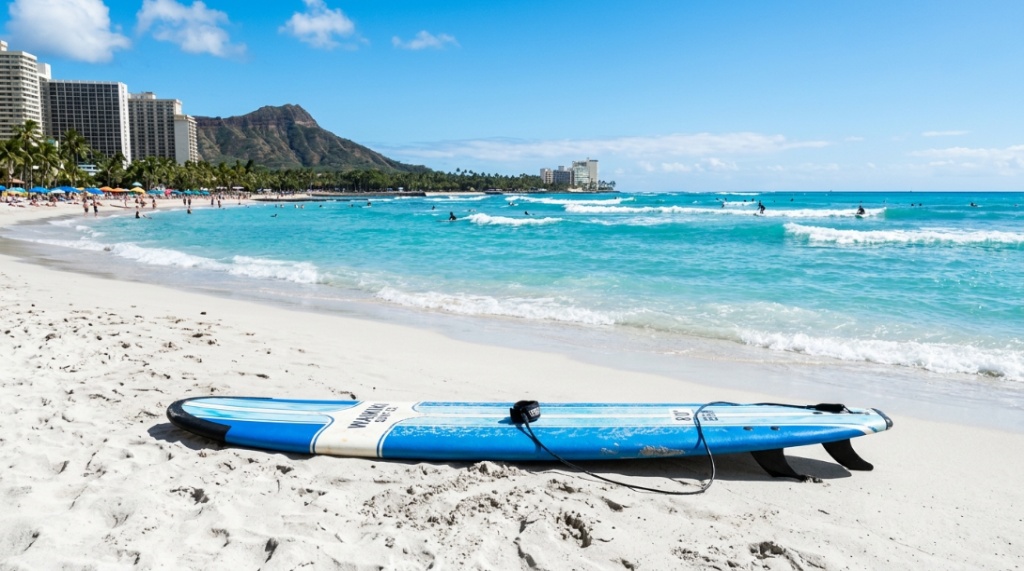
Hawaii’s surf shops stock over 40 surfboard brands—and walking into one without knowing which boards match your ability is like walking into a pharmacy and choosing medication by label color. The best surfboards for all skill levels in Hawaii aren’t determined by brand hype or price tags—they’re determined by honest ability assessment matched to specific board characteristics that Hawaiian wave conditions demand. A surfboard’s performance depends on the interaction between its shape characteristics (rocker, outline, concave, rail profile) and the wave energy acting upon it—meaning the same board performs completely differently in gentle Waikiki rollers versus hollow North Shore barrels. The problem do buyers face in Hawaii? Every shop employee recommends what they personally ride—which may be wildly inappropriate for your skill level, body type, or target waves. This guide provides level-matched recommendations for intermediate surfboards, beginner picks, and expert equipment—based on what actually works in Hawaiian conditions rather than what looks impressive in the shop rack.
What Are the Best Surfboards for Beginners in Hawaii?
The best beginner surfboards in Hawaii are 8–9-foot soft-top foam boards with high volume (70–90 liters), flat rocker, wide outline, and soft flexible fins—providing maximum stability, wave-catching ability, and safety in Hawaii’s crowded beginner lineups.
Top beginner picks ranked:
- Wavestorm 8′ Classic (Best overall value): $180–$200 at Costco Hawaii. The gold standard beginner board worldwide. Adequate volume (75L), durable construction, tri-fin setup, leash included. Excellent for Waikiki, White Plains, and gentle south shore spots. Limitation: heavy, and flex pattern is basic.
- Catch Surf Odysea Log 8’0″ (Best performance foam): $350–$400. Superior flex and responsiveness compared to Wavestorm while maintaining foam safety. Better fin system, lighter weight, and improved design that allows progression into actual wave riding rather than just standing in whitewater.
- Softech Roller 8’0″ (Best durability): $380–$430. Handboard-quality construction in foam format. Excellent fin system (FCS compatible), better rocker than Wavestorm, and build quality that survives Hawaii reef contact better than cheaper alternatives.
- INT Softboard 8’0″ (Budget-friendly quality): $200–$250. Better than generic foam boards at similar pricing to Wavestorm. Improved tail shape and fin system over big-box alternatives.
Why foam boards specifically for Hawaii beginners:
- Waikiki and beginner spots are extremely crowded — foam boards prevent injuries to others during inevitable collisions
- Hawaii reef creates board-breaking impacts that foam absorbs without financial damage
- Warm water means no wetsuit buoyancy—you need maximum board volume for flotation
- Island-powered waves move faster than mainland beginner breaks — high volume catches waves earlier, compensating for paddle speed limitations
What Are the Best Surfboards for Intermediate Surfers in Hawaii?
The best intermediate surfboards in Hawaii are funboards (7’0″–7’6″), mid-lengths (7’2″–8’0″), and wide fish shapes (5’10″–6’4″) that provide wave-catching ability for Hawaii’s paddle demands while enabling the bottom turns, cutbacks, and trim riding that define intermediate progression.
Top intermediate picks ranked:
- Firewire Addvance 7’2″ (Best mid-length performance): $700–$800. Rob Machado design that bridges the fun/performance gap perfectly. Enough volume for Hawaiian paddle-outs, enough rail and rocker for progressive surfing. Eco-friendly construction. Ideal for Town breaks and moderate North Shore days.
- Torq Mod Fun 7’2″ (Best value funboard): $400–$500. Epoxy construction that handles Hawaiian reef abuse. Wide enough for stability, refined enough for actual rail surfing. Excellent for surfers transitioning from foam boards who aren’t ready for full shortboard commitment.
- Lost Crowd Killer 7’6″ (Best wave-count machine): $650–$750. Matt Biolos design that catches everything while allowing progressive turns. High wave-count in small-to-medium Hawaiian surf. Generates speed in flat sections that shorter boards die in.
- Channel Islands CI Mid 6’10” (Best progression tool): $700–$800. Shorter mid-length that pushes intermediate surfers toward shortboard performance while maintaining forgiving volume. Excellent for surfers comfortable in head-high Hawaiian waves ready to push their turning ability.
- Album Plasmic 5’10″–6’2″ fish (Best small-wave performance): $650–$750. Wide, thick fish that rips in chest-high Hawaiian south shore days. Twin or quad fin setup for speed and flow. Rewards intermediate surfers who have solid trim and basic turning ability with high wave counts and speed.
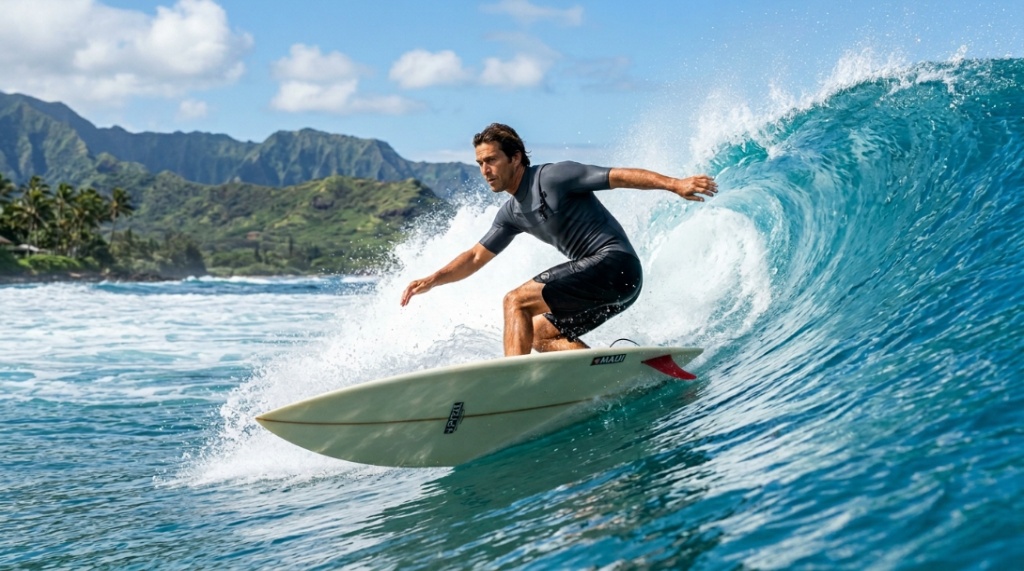
Intermediate surfboard strategy for Hawaii: own at least two boards — a funboard/mid-length for bigger days and challenging paddle-outs, plus a fish or smaller performance board for small-to-medium days when extra volume isn’t necessary. This two-board approach covers Hawaii’s full wave range without forcing compromises in either direction.
What Are the Best Surfboards for Advanced/Expert Surfers in Hawaii?
Advanced surfers in Hawaii ride performance shortboards (5’8″–6’6″) matched to specific wave conditions — with daily drivers for standard sessions, step-ups for solid swells, and specialized guns for big surf, typically from Hawaii-based shapers who understand island wave nuances.
Top advanced picks by category:
- Pyzel Ghost (Best all-around shortboard for Hawaii): $700–$850. John John Florence’s go-to shape. Designed in Hawaii for Hawaiian waves. Clean rocker, balanced volume, versatile across Town breaks and North Shore. The board most likely to feel right in Hawaii’s varied conditions.
- Arakawa Round Pin (Best North Shore daily driver): $650–$800 (custom from Eric Arakawa). Legendary Hawaii shaper. His round pin designs handle Sunset, Haleiwa, and medium Pipe with a single board. Tuned specifically for North Shore power and speed.
- Channel Islands Happy Everyday (Best small-wave shortboard): $700–$800. Extra volume in a shortboard frame for flat Hawaiian days. Rides like a shortboard but paddles like something 3 liters larger. Excellent for 2–4 foot south shore sessions.
- Pyzel Padillac (Best step-up for solid days): $750–$900. Designed for 6–10 foot Hawaiian surf. Extra length and curve for steep, fast drops while maintaining shortboard feel on the face. The step-up most Hawaii chargers reach for when swells push overhead.
- Cole Curve Ball (Best North Shore gun): Custom pricing ($900–$1,200). Designed specifically for 10+ foot Sunset and Outer Reef applications. Hawaii heritage shaping for serious big-wave surfing. Greg Long, Shane Dorian pedigree.
Expert quiver strategy for Hawaii residents:
- Small-wave fun board (fish or groveler): 5’4″–5’10”
- Daily driver shortboard: 5’10″–6’4″
- Step-up: 6’4″–7’0″
- Gun (if surfing 10+ foot): 7’6″–9’0″
How Do Board Construction Types Compare for Hawaiian Conditions?
Epoxy construction (EPS foam + epoxy resin) offers superior ding resistance for Hawaii’s reef-heavy environment, while traditional polyurethane (PU foam + polyester resin) provides the flex and feel that advanced surfers prefer in powerful Hawaiian waves.
Construction comparison for Hawaii:
| Construction Type | Durability | Performance Feel | Weight | Price | Best For in Hawaii |
|---|---|---|---|---|---|
| Polyurethane (PU/PE) | Moderate (dings easily on reef) | Excellent (natural flex, responsive) | Moderate | $500–$900 | Advanced surfers, powerful waves |
| EPS/Epoxy | Very good (reef resistant) | Good (stiffer, faster, less flex) | Light | $550–$950 | All levels, reef-heavy spots |
| Soft-top foam | Excellent (nearly indestructible) | Basic (limited rail engagement) | Heavy | $150–$450 | Beginners, rocky/reef breaks |
| Carbon/composite | Excellent | Excellent (engineered flex patterns) | Very light | $800–$1,500 | Performance-focused advanced surfers |
Hawaii recommendation by level:
- Beginners: Soft-top foam (durability + safety)
- Intermediates: EPS/Epoxy (durability + better performance than foam)
- Advanced: PU for primary waves, EPS for reef-heavy spots where ding risk is highest
Which Fin Setups Work Best in Hawaiian Waves?
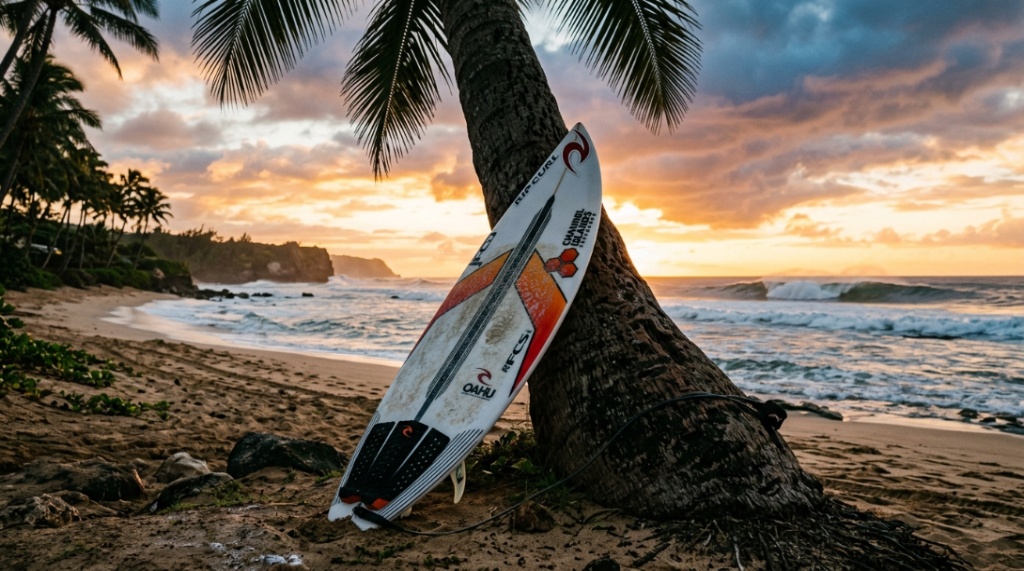
Thruster (tri-fin) remains the most versatile setup for Hawaii’s varied conditions — providing control in powerful waves while maintaining drive in smaller surf — though quad setups excel specifically in hollow waves and fast point breaks common across the islands.
Fin setup applications in Hawaii:
- Thruster (3 fins): Best for general Hawaiian surfing. Control in powerful waves, predictable turning, holds in steep faces. Standard for shortboards at Sunset, Haleiwa, Pipeline, and most reef breaks. The default choice when unsure.
- Quad (4 fins): Best for speed and hollow waves. Less drag than thruster creates more speed down the line. Excellent for barrel riding (Pipe, Backdoor) and fast point breaks (Ala Moana Bowls). Slightly less control in critical top turns than thruster.
- Twin fin: Best for fish and retro shapes on small-to-medium days. Speed and flow-oriented surfing. Excellent for south shore summer sessions and fun small-wave days. Less hold in powerful waves — not recommended above head-high in Hawaii.
- Single fin: Best for longboards at Waikiki, Queens, and classic point breaks. Smooth turns, trim-oriented surfing, classic style. The traditional Hawaiian longboard setup.
- 2+1 (single + side bites): Versatile longboard setup. Single-fin feel with added hold from small side fins. Good for longboarders who want traditional glide with modern security in larger waves.
Where Can You Test Surfboards Before Buying in Hawaii?
Hawaii offers extensive demo and rental programs through surf shops, shaper demo days at popular breaks, and a strong used-board market that lets you try boards at minimal cost before committing to purchase.
Testing options:
- Rental programs: Most Oahu surf shops ($25–$75/day) carry diverse boards. Rent different sizes and styles across multiple sessions to identify what works before investing in a purchase.
- Demo days: Brands like Firewire, Pyzel, and Channel Islands hold periodic demo events at Hawaiian breaks — letting you try current models free for a session. Follow local shops’ social media for event announcements.
- Board-swap communities: Facebook groups (“Hawaii Board Swap,” “Oahu Surf Buy/Sell/Trade”) enable buying used boards at $100–$400 to test for a period, then reselling at minimal loss if the board doesn’t work for you.
- Rental-to-buy programs: Some shops apply rental fees toward purchase if you decide to buy within a set period. Ask specifically about this option — it’s not always advertised but frequently available.
Conclusion
The best surfboards in Hawaii exist at every skill level — but only serve you if honestly matched to your current ability rather than your aspirational one. Beginners belong on high-volume foam boards that keep them safe and catching waves. Intermediate surfers thrive on mid-lengths and funboards that bridge the gap between learning stability and performance maneuverability. Advanced surfers build quivers from Hawaii shapers who design specifically for island power and wave character.
Skip the ego. Ride what works for where you actually are. The surfer on the 8-foot foam board catching 15 waves at Waikiki is having more fun—and improving faster—than the intermediate on a borrowed 5’10” shortboard missing wave after wave because the board doesn’t match their paddling ability. Choose boards that maximize your wave count in Hawaiian conditions, and progression follows naturally.
While choosing the right shape and rocker is essential for handling Hawaiian swells, true performance relies on the structural integrity of the board itself. Many modern surfboard shapers and epoxy matrix manufacturers draw inspiration from industrial curing standards to ensure maximum durability against heavy wipeouts. Just as precision Temperature Control in powder coating ovens guarantees a flawless, resilient finish on heavy-duty marine hardware, calibrated heat cycles during surfboard glassing prevent delamination under the intense tropical sun. Choosing a board built with this level of thermal and structural precision ensures your investment survives the rugged Hawaiian surf season.
Frequently Asked Questions
What surfboard brand is most popular in Hawaii?
Pyzel Surfboards (based on Oahu’s North Shore) is arguably the most popular performance brand in Hawaii — built by Jon Pyzel who shapes for John John Florence and designs specifically for Hawaiian waves. For local everyday surfing, Channel Islands, Firewire, and Hawaii-based shapers like Arakawa and T&C also maintain strong followings. For beginners, Catch Surf dominates the foam board segment.
Can a beginner use an intermediate surfboard in Hawaii?
Only if the intermediate board maintains high volume (50+ liters) and is a funboard/mid-length rather than a shortboard. A 7’2″ funboard with adequate width works for a strong beginner ready to progress from foam. However, a 6’0″ shortboard will frustrate any beginner regardless of ambition — they won’t catch waves, won’t practice turning, and won’t improve. Progress through board types sequentially, not by skipping levels.
How many surfboards does an intermediate surfer need in Hawaii?
Two boards cover an intermediate’s Hawaiian needs well: one funboard/mid-length (7’0″–8’0″) for bigger days and challenging paddle-outs, and one shorter performance shape — fish or hybrid (5’10″–6’6″) — for small-to-medium days when extra volume isn’t required. This two-board quiver handles everything from 1-foot summer days to solid 4–6 foot winter swells within intermediate ability range.
Are used surfboards worth buying in Hawaii?
Absolutely — Hawaii’s high surfer density creates one of the best used-board markets in the world. Quality used boards ($100–$500) often deliver identical performance to new boards at 40–60% less cost. Inspect for: clean stringer (no browning indicating water damage), intact fin boxes, pressure dents that are cosmetic only (acceptable) versus structural delamination (avoid), and check rail integrity along the entire length.
What surfboard works best for both the North Shore and South Shore?
A mid-length (7’0″–7’6″) with moderate rocker is the most versatile single board for both shores. It handles South Shore’s small-to-medium waves with adequate paddle speed and glide, while providing enough control and rocker for moderate (4–6 foot) North Shore days. No single board optimizes for both shores’ extremes—but a well-designed mid-length provides acceptable performance across the full range.
Should I buy a surfboard before or after arriving in Hawaii?
After arriving, unless you already own a board tested in comparable wave conditions. Hawaii’s surf shops and shapers offer boards specifically designed for island waves, staff provide wave-matched advice, and the used market provides incredible value. Buying before arriving risks bringing an inappropriate board designed for different conditions. The only exception: if you already know exactly what works from prior Hawaii experience and want your custom dimensions from a mainland shaper.