A newborn’s fever can rise faster than ice melts on a parked car hood in July, and most parents don’t realize the wrong thermometer can delay accurate readings when every minute matters. Choosing the right newborn thermometer is less about buying the most expensive gadget and more about finding a safe, fast, medically reliable device that works consistently during stressful moments. Parents often overpay for unnecessary smart features while missing the few essentials pediatricians actually recommend.
Newborns cannot regulate body temperature as effectively as older children. That makes accurate temperature monitoring critical during the first months of life. An unreliable reading may lead to unnecessary panic, missed illness signs, or late medical intervention. This guide explains how to choose the best infant thermometer without wasting money, what features actually matter, and which thermometer types are safest for babies.
What Is the Best Type of Newborn Thermometer for Accurate Readings?
The best thermometer for a newborn is usually a digital rectal thermometer because it provides the most accurate core body temperature reading for infants under 3 months old.
Pediatricians and the American Academy of Pediatrics consistently recommend rectal thermometers for newborns because accuracy matters more than convenience during the first 90 days. A fever in a newborn can signal infection or serious illness, and even a small temperature difference can affect medical decisions.
Many parents start searching for a reliable newborn thermometer guide with pediatric-safe recommendations after discovering that some forehead and ear thermometers can produce inconsistent readings on very young babies.
Why are rectal thermometers considered the gold standard?
Rectal thermometers measure internal body temperature directly, making them less affected by room temperature, sweating, or improper positioning.
- Most accurate for babies under 3 months
- Recommended during fever-related emergencies
- Fast digital readings available within seconds
- Affordable compared to premium smart thermometers
A temperature of 100.4°F (38°C) or higher in a newborn requires immediate medical attention. Accuracy is not optional.

Which Features Actually Matter in an Infant Thermometer?
The most important infant thermometer features are accuracy, fast readings, easy cleaning, soft tips, and a clear display.
Brands often advertise smartphone syncing, growth tracking, and AI alerts, but most parents only need a dependable reading during late-night checks. Paying extra for unnecessary technology rarely improves medical accuracy.
Must-have features for newborn temperature monitoring
| Feature | Why It Matters | Worth Paying Extra? |
|---|---|---|
| Fast digital reading | Reduces baby discomfort | Yes |
| Flexible soft tip | Improves safety for rectal use | Yes |
| Backlit display | Useful during nighttime checks | Yes |
| Bluetooth app syncing | Mainly convenience feature | No |
| Memory storage | Tracks temperature trends | Sometimes |
| Waterproof design | Easier sanitation | Yes |
Many parents overspend on multifunction baby health monitor devices when a reliable $10–$25 digital thermometer performs just as accurately.
Do smart thermometers improve safety?
Smart thermometers can help track temperature history, but they do not automatically improve medical accuracy.
Continuous monitoring patches and app-connected systems are useful for convenience, especially for anxious first-time parents. However, pediatricians still recommend confirming fever readings with a standard digital thermometer.
Are Forehead Thermometers Safe and Accurate for Newborns?
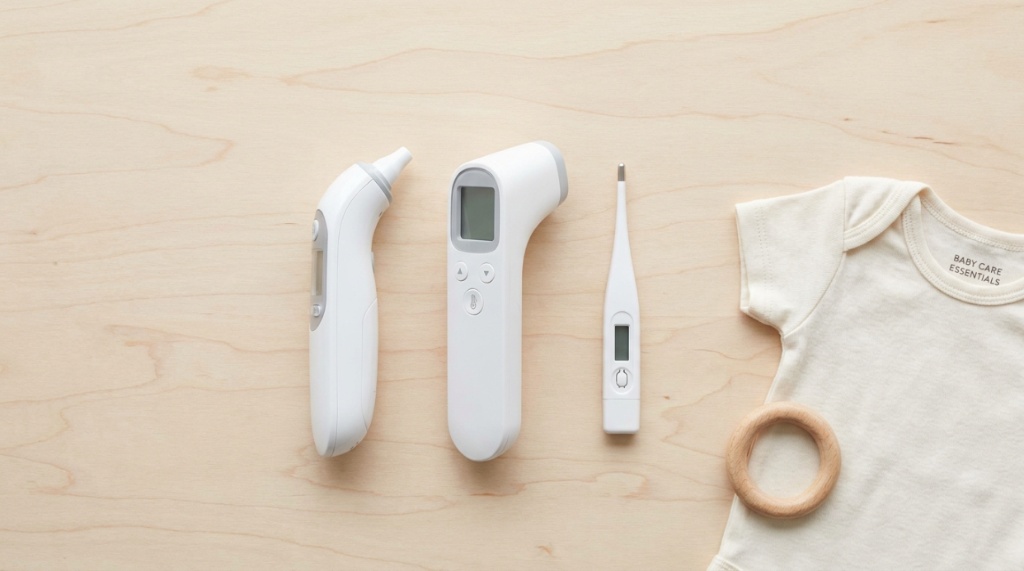
Forehead thermometers are safe for newborns, but they may not always be as accurate as rectal thermometers during the first months of life.
Infrared forehead thermometers became extremely popular because they are non-invasive and quick. They are especially useful when babies are sleeping. However, improper placement, room temperature, sweat, or movement can affect readings.
Parents researching overall child wellness often explore broader healthy family routines, including hydration and nutrition ideas like this kid-friendly hydration smoothie recipe that supports fluid intake during warmer months.
When should parents use forehead thermometers?
Forehead thermometers work best for quick screening checks rather than confirming serious fever symptoms.
- Good for sleeping babies
- Less stressful than rectal readings
- Ideal for repeated temperature checks
- Helpful for older infants and toddlers
If a forehead reading seems high or symptoms appear serious, confirm the temperature with a rectal thermometer.
Should Parents Buy an Ear Thermometer for a Newborn?
Ear thermometers are generally not recommended for newborns younger than 6 months because tiny ear canals can affect reading accuracy.
Tympanic thermometers measure heat from the eardrum using infrared technology. While they work well for older children, newborn ear canals are often too small for reliable positioning.
Why do ear thermometers fail with newborns?
Incorrect positioning inside a newborn’s ear can produce inaccurate results.
- Small ear canals limit sensor placement
- Wax buildup affects readings
- Movement disrupts scanning
- Requires practice for accuracy
Many parents buy ear thermometers expecting hospital-grade performance, only to discover inconsistent results during real-world use.
How Much Should You Spend on a Baby Health Monitor or Thermometer?
A high-quality newborn thermometer usually costs between $10 and $40, and most families do not need premium models over $80.
Marketing often targets anxious new parents with expensive “all-in-one” baby health monitor systems. Some include oxygen tracking, sleep monitoring, and smartphone apps. While useful in some situations, these features rarely replace basic pediatric guidance.
What price range offers the best value?
| Price Range | Typical Features | Recommended? |
|---|---|---|
| $10–$20 | Basic digital rectal thermometer | Yes |
| $20–$40 | Fast readings, backlight, waterproof | Best value |
| $40–$80 | Forehead scanning, memory tracking | Optional |
| $80+ | App syncing, wearable monitoring | Usually unnecessary |
Consumer surveys show that parents often prioritize convenience over accuracy after the newborn stage, which explains why forehead thermometers dominate online sales despite rectal thermometers remaining medically preferred for infants.
Can cheap thermometers still be accurate?
Yes. Many affordable digital thermometers meet clinical accuracy standards when used correctly.
Price does not always equal reliability. Proper usage matters more than luxury branding.
What Is the Safest Way to Take a Newborn’s Temperature?
The safest way to take a newborn’s temperature is to use a clean digital rectal thermometer with gentle insertion and proper hygiene.
Safety concerns often come from improper technique rather than the thermometer itself. Modern infant thermometers are designed with flexible tips and safety stops to reduce risk.
Step-by-step newborn temperature safety tips
- Wash the thermometer before and after use
- Apply a small amount of petroleum jelly
- Lay the baby on their back or stomach securely
- Insert gently about half an inch to one inch
- Hold still until the reading completes
- Clean thoroughly afterward
Never force insertion or use old mercury thermometers, which can break and expose toxic materials.
How Do Pediatricians Recommend Monitoring Fever in Newborns?
Pediatricians recommend monitoring both temperature and symptoms together rather than relying only on thermometer readings.
A newborn with poor feeding, unusual sleepiness, breathing changes, or persistent crying may require medical evaluation even without a high fever.
What symptoms should parents watch alongside fever?
- Refusing feeding
- Blue lips or pale skin
- Breathing difficulty
- Extreme irritability
- Weak crying
- Reduced wet diapers
According to pediatric emergency guidelines, fever in babies younger than 3 months is treated more seriously because immune systems are still developing.
Do Multi-Function Baby Health Monitors Replace Thermometers?
No. Baby health monitor devices can support monitoring, but they should not replace an accurate thermometer.
Wearable socks, smart bassinets, and monitoring cameras can provide useful alerts for movement, breathing, or oxygen levels. However, these systems sometimes create unnecessary anxiety through false alarms.
Parents balancing overall family nutrition and recovery meals during illness may also explore comforting homemade dishes such as this traditional slow-cooked family meal guide for older children and adults.
What should parents prioritize instead?
Reliable medical tools matter more than trendy gadgets.
- Accurate digital thermometer
- Pediatric emergency contact information
- Basic fever medication guidance
- Understanding warning signs
Technology helps, but informed parental observation remains essential.
How Can Parents Avoid Overpaying for an Infant Thermometer?
Parents can avoid overpaying by focusing on clinical accuracy, safety, and ease of use instead of marketing claims.
Many premium products advertise features that sound impressive but add little value during actual illness situations.
What marketing tricks should parents ignore?
- “Hospital-grade” labels without certification
- Overpriced bundled baby kits
- App subscriptions for basic tracking
- Claims of instant perfect readings
- Luxury packaging with identical internal sensors
Reading verified customer reviews and pediatric recommendations often provides better guidance than influencer promotions.
What Is the Best Overall Thermometer Choice for Most New Parents?
For most families, the best choice is a mid-range digital rectal thermometer combined with a secondary forehead thermometer for convenience.
This combination balances medical accuracy with practical daily use. Parents gain dependable fever confirmation while also having a stress-free option for quick checks.
Ideal newborn thermometer setup
| Purpose | Recommended Device |
|---|---|
| Accurate fever confirmation | Digital rectal thermometer |
| Quick nighttime checks | Forehead infrared thermometer |
| Travel backup | Compact waterproof digital thermometer |
Conclusion: How Can Parents Choose the Right Newborn Thermometer Confidently?
The best newborn thermometer is not necessarily the most expensive model on the shelf. Accuracy, safety, speed, and ease of cleaning matter far more than smartphone apps or luxury branding. For newborns younger than three months, digital rectal thermometers remain the most medically trusted option, while forehead thermometers provide useful convenience for quick checks.
Parents who understand how temperature monitoring works make calmer, more informed decisions during stressful situations. A dependable infant thermometer can prevent unnecessary panic and help identify medical concerns early. Spending wisely means investing in proven reliability instead of unnecessary extras.
If you are building a complete newborn care setup, resources like this detailed baby thermometer buying guide for new parents can help compare practical options before making a purchase.
Choosing carefully now can save money, reduce stress, and provide peace of mind during your baby’s most vulnerable months.
Frequently Asked Questions About Newborn Thermometers
What temperature is considered a fever for a newborn?
A newborn fever is generally defined as a rectal temperature of 100.4°F (38°C) or higher. Babies under 3 months with a fever should receive medical attention immediately.
Can I use a forehead thermometer on a newborn?
Yes, forehead thermometers are safe for newborns, but they may not always provide the most accurate readings. Pediatricians often recommend confirming high readings with a rectal thermometer.
How often should I check my baby’s temperature?
You should check your baby’s temperature when symptoms appear, such as unusual sleepiness, poor feeding, fussiness, or warmth to the touch. Frequent unnecessary checks can increase parental anxiety.
Are smart baby thermometers worth the money?
Smart thermometers can improve convenience and tracking, but they do not necessarily improve accuracy. Many affordable digital thermometers work just as effectively.
What thermometer do hospitals use for newborns?
Hospitals commonly use professional-grade digital rectal thermometers for newborns because they provide the most accurate core body temperature readings.
Can a newborn thermometer be used for older children?
Yes. Most digital infant thermometers can continue being used for toddlers and older children, although parents often switch to forehead or ear thermometers later for convenience.
How long does a baby thermometer usually last?
A quality digital thermometer can last several years with proper cleaning and battery replacement. Waterproof models typically have better durability.